
Process Over Product
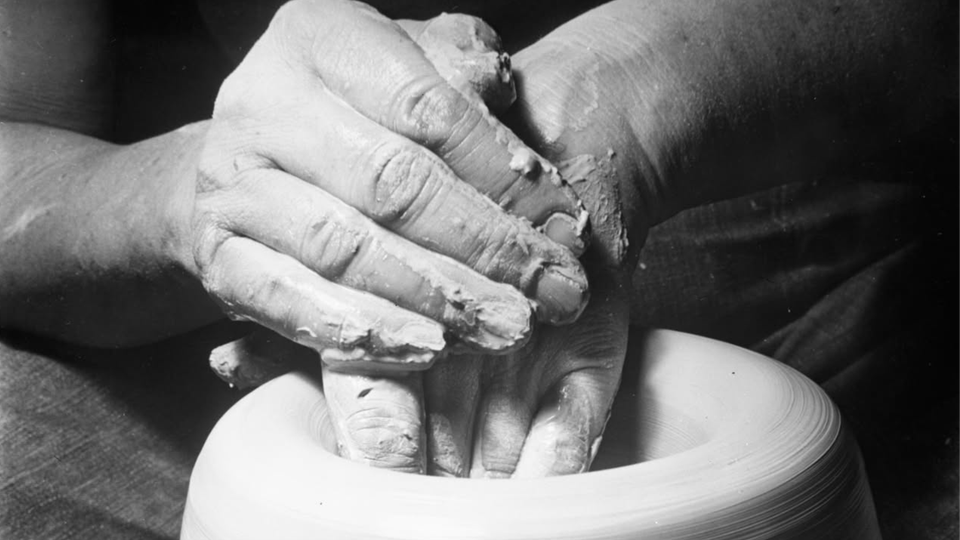
Last fall, I visited Pond Farm Pottery in the Sonoma redwoods. In the 1940s, Marguerite Wildenhain taught pottery there as a way of living. When someone told her Americans had no tradition, that pottery came from European and Japanese lineages, she responded with "A Potter's Descent." "America, with its diverse ethnic groups, is a land of free beings and tolerance, in which an authentic tradition can only mean a pluralistic coexistence of many traditions." She wrote that in 1954.
When Olive Dame Campbell founded the John C. Campbell Folk School in 1925, she called craft a nostalgic key to a more morally sound past. Craft became about cultural preservation, economic justice, political refuge. Pond Farm itself sheltered artists fleeing fascism. What Wildenhain understood was different. Not preservation. Pluralistic coexistence. Not protection. A way of living.
Craft schools teach process over end product. Craft itself teaches something else entirely—not what to make, but how to see, feel, experience, and belong. Connection to material, process, community, the natural world. It's a system of values disguised as skill—what Wildenhain called "the discipline not to betray the requirements of art."
At a tech company built on personalization at scale, I was once told I was "too craft." They meant it as a limitation. What they missed was craft taught me that designing and telling stories is about shaping connection and meaning.
Artists don't change systems by creating beautiful objects. They change them by bringing those ways of seeing into spaces that need them most.
— Courtney
P.S. If you're new here, welcome. We share stories from the edges of transformation, illuminating the thresholds between emerging technologies and enduring human values. Each month we explore one of four dimensions - culture, craft, ecology, futures.