The Sound of Color
N°015
Not long ago I stood in Georgia O'Keeffe's house in Abiquiú, in a room she had built around a single window. The glass held the whole valley — cottonwoods, red hills, the long afternoon light — as if the wall had been opened to let the outside come and sit down. No music was playing. You could feel where it would have been.
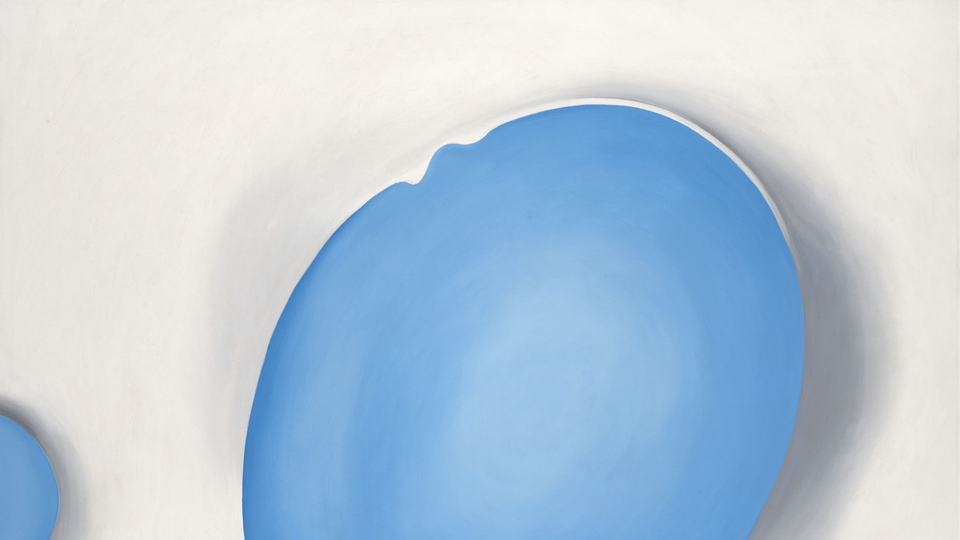
Kandinsky had given her the language years earlier. In Concerning the Spiritual in Art, he wrote that a painter tired of mere representation cannot help but envy music — "the most non-material of the arts" — for how easily it reaches the inner life. Colors, he believed, had their own sounds. O'Keeffe went looking for the same thing in paint: not the flower, but what the flower did to her; not the hill, but its note.
Her teacher Arthur Wesley Dow had cleared the ground for it. Art is not description, he taught — it begins inside, as feeling, and it is the artist, not the subject, who makes the response. He was handing agency back to people who had been trained only to copy. Years earlier, Hilma af Klint began painting vast abstractions straight from an inner source. Work the world wouldn't be ready to see for decades.
What the three of them were reaching for has a clinical name now — synesthesia, one sense opening involuntarily into another, a note arriving as a color. But the older idea underneath is simpler: the image is a translation. Something is felt first, in one particular body, before it's ever seen.
We can generate a thousand versions of the hill before breakfast. The tools are extraordinary. They are also, as L.M. Sacasas puts it, less a tool than an environment, something that reforms how we see from the inside out. O'Keeffe's whole life argues the other way: the house, the window, the dress, the garden, the single held note in an empty room — one person insisting that the source matters more than the output, that what you make should come from somewhere.
When the tools can render anything we can see, what becomes of the part of us that could only be heard from the inside?
— Courtney
P.S. Thresholds is a letter moving across five dimensions — craft & material, culture & perception, philosophy, the natural world, and new technology. Exploring what endures at the edges of transformation. I'm glad you're here.