Trust and True
N°013
A few weeks ago I reconnected with an old friend, now living in Vienna. We met in our twenties at Ralph Lauren. We worked together, traveled together, knew each other in the unhurried way you know people when time still feels unlimited. Life moved us in different directions. Years passed without real contact. And yet the trust is still there. If anything, it has deepened.
Lately, I've been working in unfamiliar ground — new collaborators, new tools, new projects. And trust keeps surfacing on different terms. Trust isn't the backdrop to the work anymore; it's the invisible contract embedded in all of it.
Jasmine Bina calls this the Contract Era. AI didn't create distrust, it made the invisible infrastructure of trust legible. Every assumption that ran in the background now has to be written out as terms — the architecture we were always running on, suddenly visible.
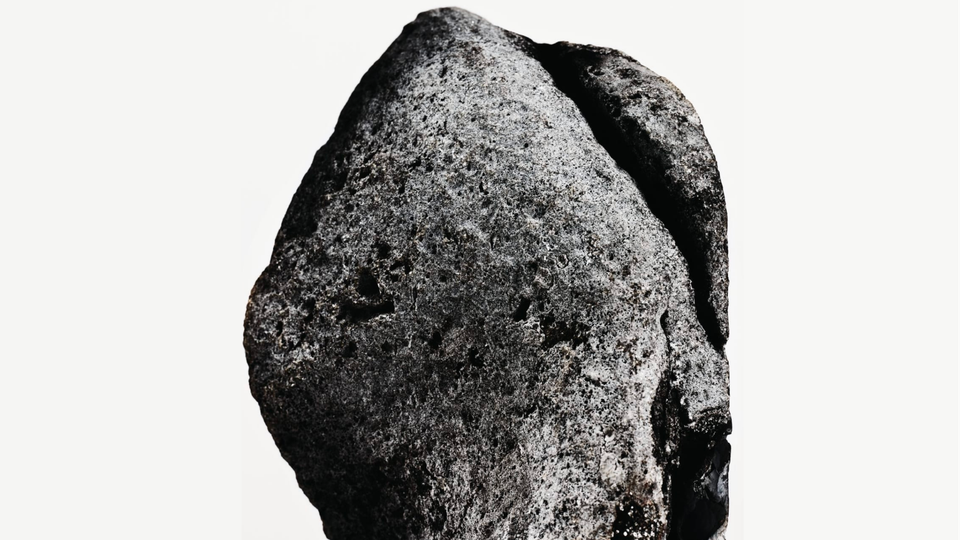
Wendell Berry, in Standing by Words, argues that language only means something when the speaker can be held to it. Trust and true come from the same root — deru, firm, solid, like stone. A word you give is only as good as your willingness to be accountable to it. What we call trust might just be the accumulated evidence that someone keeps being who they said they were.
That's what I felt reconnecting with my friend. Not a feeling exactly, more like a record. Years of small reliabilities, unremarkable at the time, now load-bearing. Trust is built from the possibility of defection: the weight comes from the times consistency wasn't guaranteed. Time, friction, repair, the choice to come back.
You only earn trust by being willing to lose it. But trust requires vulnerability, and most of what's designed removes it. It performs trust instead of recording it.
The harder question isn't how to be trusted. It's how to keep a record worth trusting when performing one asks nothing of you.
— Courtney
Of Adjacent Intrigue:
Owning Our Words: Sounding the Depths of Language — L.M. Sacasas / The Convivial Society (one of my favorite substacks). Words only hold when someone owns them. Why outsourcing articulation to machines doesn't just change what we write — it changes what we can be trusted to mean. [culture]
Why Genuine Patina Is Personal and Priceless — Glenn Adamson / Untapped Journal. The surface that keeps the count. Why the marks time leaves on an object are the only proof of its life. [craft]
Homo Faber 2026 — Venice. Makers who measure time in mastery. A biennial for the crafts that take decades to learn and can't be scaled. [craft]
How You Can Go Upstream — Ed Cotton / Provoke. The guild as an alternative to the platform. Why craft traditions — slow, standards-based, accumulated — might be the model strategy needs now. [futures]
Turning Matter Into Meaning — Maria Popova / Atmos. Wonder as the antidote to grip. Why loosening certainty might be the only way to arrive at something real. [culture]
P.S. Thresholds is a newsletter exploring the values, methods, and culture that shape what endures. I'm glad you're here.